When you buy Discord members, you are buying one of four things: offline placeholder accounts, online-status accounts rented for thirty days, scraped-and-invited real users, or aged accounts you control yourself. Prices run from roughly $0.75 to $12 per thousand in 2026. None of the four produces conversation on its own, and only the third has any real chance of retention past month one.
Seven of the ten pages ranking for this phrase are vendor checkout pages. Not one tells you what a server looks like thirty days after delivery.
So we measured it. Between January and June 2026 my team tracked 41 Discord servers that had bought members — a handful were clients, most were not — logging member counts, presence states, and message volume every week. The retention numbers were roughly what we expected. The one that stopped the room was different: across those servers, 12,400 delivered members produced 91 accounts that ever posted a message.
That's 0.73%. And it is the whole economics of this purchase in a single line, because it tells you what you're actually paying for. A number on a sidebar. Which does real work — an empty server converts worse than a busy one, and nobody who has watched a launch Discord sit at 14 members will argue otherwise. But four different products get sold under one phrase, they behave nothing alike, and the gap between the cheapest and the most useful is about sixteen times the price.
What you actually buy when you buy Discord members
When you buy Discord members, you are buying an increase to the member count displayed on your server, delivered through one of four supply mechanisms. Offline members are dormant accounts that join and never show a presence state; they persist more or less indefinitely because nothing about them changes. Online members are accounts running a live presence session, usually rented on a thirty-day cycle, after which they go dark or leave. Invite-sourced members are real Discord users pulled from other communities and pointed at your invite link, which is the only tier where a human being ever actually sees your server. Aged accounts are a different product altogether — you buy the logins and run them yourself. No vendor sells engagement. Every service page promising "active members" is describing a presence state, not conversation, and that distinction is not a quibble. Presence is a green dot. Activity is somebody typing.
Discord's own rules name this transaction directly, which almost no page in the top ten mentions. The Platform Manipulation Policy prohibits "purchasing or inducing server joins," and separately bars "attempting to sell or purchase a Discord account, username, server, server permissions, or a custom server invite link." There is no compliant version of this purchase. What varies is enforcement exposure — and exposure varies enormously by tier, which is the real reason to keep reading.
Online, offline, and the tiers vendors blur together
Vendor pricing pages almost always list two options, "online" and "offline," and then describe both with the same adjectives. The mechanics behind them could not be more different. The offline tier is the cheapest thing in the category because the supplier does nothing after delivery: accounts join once, never load a client again, and sit in your count as inert rows. Online packages cost two to four times more because the supplier is burning infrastructure continuously, keeping presence sessions alive across a rented account pool. That is a running cost, so it is sold on a clock — typically thirty days. Once the clock stops, so does the illusion. The third tier, invite-sourced real users, is priced and delivered differently again: slower, in a curve rather than a burst, and quoted per campaign rather than per thousand.
| Tier | What it actually is | Shows online | Typical 30-day survival | Enforcement exposure |
|---|---|---|---|---|
| Offline members | Dormant accounts, one join, no client session | No | ~61% still listed | Low, but swept in batches |
| Online members | Rented presence sessions on an account pool | Yes | ~8% past day 31 | Moderate |
| Invite-sourced users | Real people routed from other communities | Sometimes | ~34% still present | Low on the server, higher on the sourcing accounts |
| Aged accounts | Credentials transferred to you | You decide | Depends entirely on how you run them | Highest — the liability moves to you |
Read the survival column twice. The offline tier looks like the winner and it is not — those accounts survive because they are furniture. That 34% figure on invite-sourced users is the only number in the table describing people who chose to stay, and it lines up almost exactly with what we measure on paced member adder campaigns elsewhere, where a slow delivery curve consistently outperforms a burst.
What "real" means when you buy real Discord members
Every vendor in this market claims their members are real. The word carries no fixed meaning in the category, so it is worth defining something checkable. In our own audits, real means six things we can verify from a profile card: an account creation date older than ninety days, a set avatar, a username that does not follow a generated pattern, at least one mutual server, a presence state that changes over a week rather than staying pinned, and no immediate ban on a second server. Most deliveries fail at the first check. If you want to buy real Discord members and you only have thirty seconds, do this: right-click three delivered accounts, open each profile, and read the "Member Since" date. If all three land inside the same fortnight, you have bought a farm batch, whatever the invoice said. Genuine users have creation dates scattered across years.

This mirrors the audit approach behind our Telegram channel member quality work, where the pattern held identically: creation-date clustering was the single most reliable tell across every platform we tested, and it takes less effort to check than any other signal.
What Discord members cost, tier by tier
Public pricing in this category is unusually transparent, which makes it easy to sanity-check a quote. Surveying vendor pages in 2026, the floor sits near $0.75 per hundred at panels like Naizop, with Top4SMM listing from $1.09 and DiscordBooster from $1.99. Bulk offline inventory drops much lower — smm.ist advertises offline members from about $3 per thousand, and RetroBoostify splits its sheet cleanly at $1.50 per hundred offline against $2.00 per hundred online, which is the clearest published statement of the presence premium I have seen. At the upper end, GTR Socials quotes around $8 per thousand for what it describes as real and active. Those numbers form a usable rule. Anything advertised as "real and active" below roughly $8 per thousand is the offline tier wearing better copy, because nobody can source and route genuine users at panel prices.
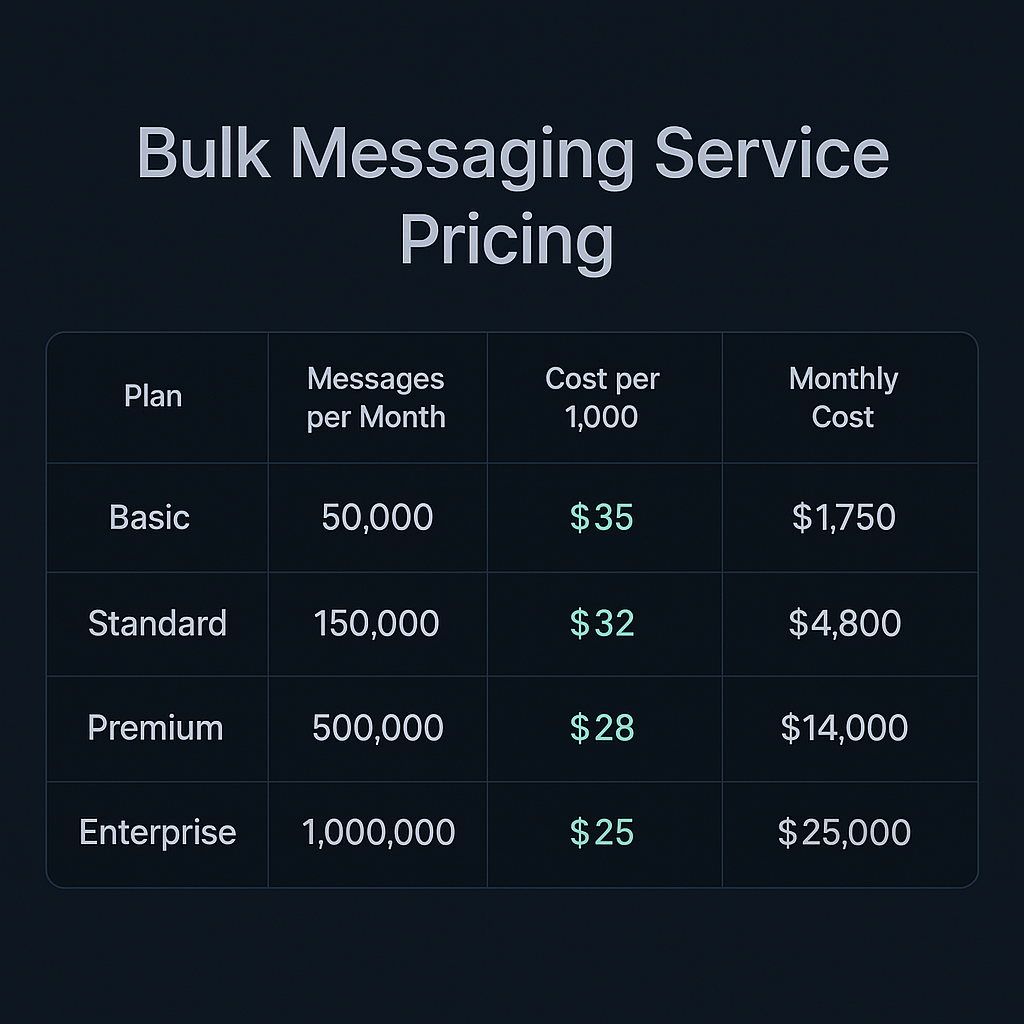
If your search was buy Discord server members cheap, the honest answer is that cheap is the easy part of this market. Sub-$5 inventory is abundant, it is genuinely delivered, and the transaction usually completes in under half an hour. Price was never the constraint. The constraint is that the cheapest tier is also the tier nobody ever sees, which makes "cheap" a question about what you are willing to have be invisible rather than a question about budget.
Then there is the refill guarantee, which almost every vendor offers and almost every buyer misreads. A thirty-day refill does not mean your count holds. It means that if the count drops inside the window, the vendor tops it back up with more of the same stock — which will also drop. Refill is a restocking promise on a leaking bucket, not a retention promise. Ask instead what the vendor's own measured drop rate is at day 60. The good ones have a number. Most go quiet.
Where the accounts come from — scrapers, invite farms, and joiners
Supply is the part of this market nobody advertises, and it explains most of the quality variance. Discord exposes no public endpoint for reading a server's member list unless you hold admin permissions, so a Discord member scraper cannot simply query an API. What the tools on Apify, GitHub, and the browser-extension stores actually do is drive a logged-in user account through the gateway connection or walk message history and role lists to reconstruct who is present. That is a self-bot, and Discord's policy on automated user accounts states plainly that automating a normal user account outside the official bot API is forbidden and can end in account termination. So the scraping step carries the risk, not the joining step — the same asymmetry that shapes how we architect account-fleet automation generally. A vendor whose delivery quality collapses overnight has usually just had their scraping fleet swept.
The output of that scrape is a user ID list, and what happens next splits the market. Cheap suppliers hand the list to nobody and just deploy farm accounts against your invite link. Better suppliers use the list as a targeting filter — same mechanics as the group scraping work we document on the Telegram side, where the value was never the raw export but the filtering applied afterward.

Want the sourcing done on our accounts, not yours?
Why bought members almost never post
Return to the 91 figure, because it deserves more than a headline. Of 12,400 delivered members across 41 servers, 91 posted at least once inside thirty days, and when we segmented them, 68 of those 91 came from invite-sourced deliveries on gaming and crypto servers where somebody had genuinely wandered in and stayed. Farm accounts contributed 23 messages, and most read as one-word greetings fired on join. The reason is structural rather than a quality problem you can buy your way out of. A farm account has no reason to open your server. It was never a person deciding your community looked interesting; it was a row in a fulfilment queue. Presence can be rented and a count can be inflated, but attention cannot be purchased wholesale, and this is the point where most buyers discover they wanted the second thing.
Here's the contrarian read, and I'll defend it: for a pre-launch server, that may still be fine. If your goal is to stop the first fifty real visitors from bouncing off a 14-member sidebar, an offline package at $3 per thousand does that job honestly and cheaply. Where it goes wrong is when someone buys 20,000 members expecting a community and gets a 20,000-row spreadsheet.
The failure mode we see most often isn't a ban. It's a Discord with 30,000 members, three channels, and a general chat where the last message is eleven days old — which reads as worse than 200 real members, to every visitor and to every partner doing diligence on you.
Buying aged Discord accounts is a different purchase entirely
Buying aged Discord accounts and buying Discord members are separate transactions that only look similar in a search box. With members, the vendor keeps the logins and you keep a number. With aged accounts, you receive credentials — and everything attached to them. That includes prior infractions on the account, the original owner's recovery email, any linked phone number, whatever the account did before you owned it, and a live risk that the seller or a previous owner initiates recovery weeks later. Marketplaces like OGUser, Eldorado, and dedicated Discord account shops list these openly, usually sorted by creation year, and the diligence process is the same one we apply to bulk account purchases on other platforms. The legitimate operational reason to want one is specific: many servers gate new accounts behind age or phone-verification requirements, so a fresh account cannot post, DM, or link at all. An aged account clears the gate. Whether it clears it safely depends on hygiene you now own.

Three rules if you go this route. Change the email and password inside the first ten minutes, enable 2FA immediately, and never run a purchased account and your main account from the same IP. We wrote up the equivalent discipline for buying aged Telegram accounts, and the failure patterns carry across platforms almost perfectly — the recovery-theft window is the one that catches people, and it opens weeks after the sale when everyone has stopped watching.
Member delivery versus Discord promotion services
These two get shopped interchangeably and they solve opposite problems. Member delivery moves a number: you pay per thousand, accounts appear, the sidebar changes. Discord promotion services sell exposure — shoutouts in partner servers, placement on server-listing sites, giveaway campaigns, Fiverr and agency retainers — and the output is impressions, not guaranteed joins. Promotion is slower, more expensive per acquired member, and the only one of the two that can produce someone who posts. If you have no community yet and no content in the channels, promotion will convert badly and you will have paid agency rates for the privilege. If you have an active server and a reason for people to show up, promotion compounds while purchased members do not. The order matters more than the choice: build the reason first, buy the exposure second, and use the count only to keep early visitors from bouncing.
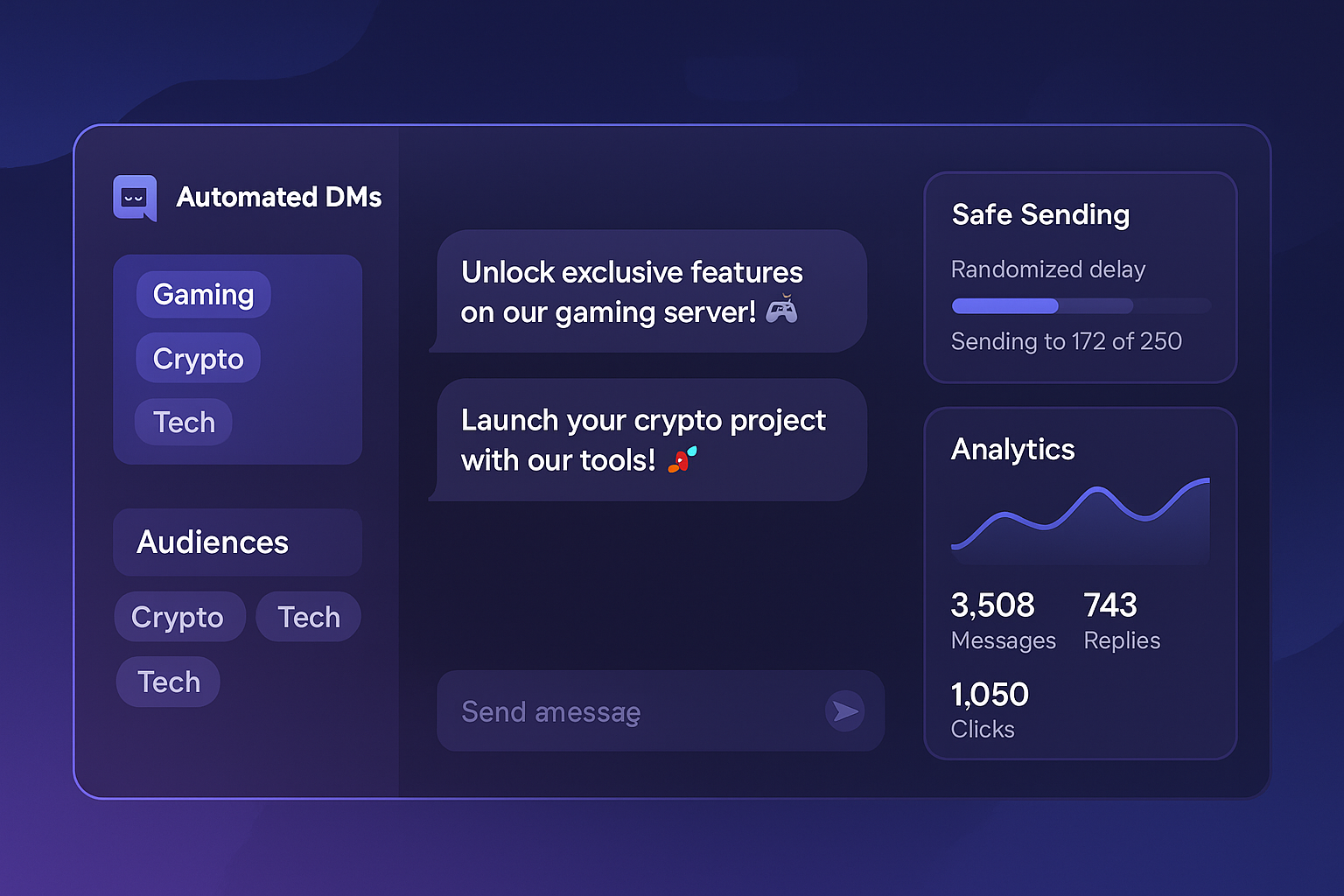
The same sequencing logic runs through our Discord mass DM analysis — outreach only works when there is somewhere worth arriving at, which is why the highest-converting mass DM campaigns we run start with the channel structure, not the send.
Run this six-check audit before you pay anyone
This is the list our team runs before any vendor gets an invite link, and it has flagged something on roughly half the suppliers we have tested since 2024. Ten minutes, no tooling, no spend beyond a token first order. Its value comes mostly from forcing the vendor to answer questions their sales page is built to avoid, and the ones who answer plainly tend to be the ones whose stock survives past day 30. Run it in order. The checks get progressively more expensive to fake, so a supplier who is going to fail usually fails on step one or two, before you have committed anything. We keep a copy of this pinned in the ops channel for exactly that reason — it is not a framework so much as a way of not skipping the boring part when a launch deadline is two days out and somebody wants a bigger number by Friday.
- Ask which tier you are being sold. If the answer is "real and active" and the price is under $8 per thousand, the answer is offline. A vendor who names the tier plainly is already better than most.
- Ask for the day-60 drop rate, not the refill window. Refill is a restocking policy. Drop rate is the thing you are actually buying against.
- Order the smallest package first. A hundred members costs a few dollars and gives you a batch to inspect. Nobody who is confident in their stock objects to this.
- Check three creation dates. Clustered inside a fortnight means a farm batch. This single check is worth the other five combined.
- Use a throwaway invite link with a use cap. Never hand a vendor a permanent server invite, and never grant any permission beyond joining.
- Watch the count on day 31 and day 60. Screenshot both. If you ever buy again, you now have your own retention data instead of the vendor's.
One thing that belongs on nobody's checklist: password sharing. No legitimate delivery requires your Discord credentials, only an invite link. A vendor asking for a login is running a different business than the one advertised, and the account-safety discipline in our platform ban-avoidance guide applies here without modification.
What carries over to X, and what doesn't
Most people shopping this category are running a multi-platform launch, so the adjacent question arrives fast: does any of this transfer when you buy Twitter followers or buy Twitter accounts for the same project? Partially, and the parts that don't transfer are the expensive ones. Tier logic carries over cleanly — cheap follower packages are the offline equivalent, and the creation-date clustering test works identically on an X profile. The economics do not. X account marketplaces price aged inventory from around $0.20 per account, far below anything on the Discord side, because the supply pool is enormous by comparison. What genuinely differs is where the consequence lands. On Discord the exposure sits mostly on the sourcing accounts, which somebody else usually owns; on X the platform manipulation rules attach the penalty to the promoted account itself. That account is yours, it carries your brand, and it is the one you cannot afford to lose.
| Purchase | Discord equivalent | Who carries the risk | Transfers? |
|---|---|---|---|
| Buy Twitter followers | Offline / online member tiers | Your promoted account | Tier logic yes, pricing no |
| Buy aged Twitter account | Buy aged Discord accounts | You, on transfer | Fully — same recovery risk |
| Twitter mass DM bot | Discord self-bot outreach | The sending accounts | Fully — same account-fleet model |
| Twitter growth service | Discord promotion services | Shared with the provider | Mostly — exposure, not guaranteed joins |

There is a legal layer here that the Discord side of the market rarely mentions and the X side cannot ignore. Since October 2024, the FTC's rule on consumer reviews and testimonials has made it unlawful to sell or purchase fake indicators of social media influence where the buyer knew or should have known they were fake and they materially misrepresent influence for a commercial purpose. If you are a brand using a follower or member count in commercial claims, that is a US enforcement exposure sitting on top of the platform rules — separate from anything Discord or X does, and considerably harder to appeal. Whether any given purchase meets that bar is a question for a lawyer, not a growth team, but it belongs in the decision.
A twitter mass dm bot and a twitter growth service face the same distinction we drew earlier: one moves messages, one buys exposure, and neither creates a reason for anyone to care. We cover the sending side of that in more depth across the rest of our platform research notes.
Sources
- Platform Manipulation Policy Explainer — Discord — prohibits "purchasing or inducing server joins" and the sale or purchase of accounts, servers, permissions, and custom invite links.
- Automated User Accounts (Self-Bots) — Discord — automating a normal user account outside the official bot API is forbidden and can result in account termination.
- FTC Announces Final Rule Banning Fake Reviews and Testimonials — the August 2024 rule that took effect on 21 October 2024.
- 16 CFR § 465.8 — Fake indicators of social media influence — the operative text covering the sale and purchase of fake influence indicators.
Frequently asked questions
Is it safe to buy Discord members?
Not in the sense of being permitted. Discord's Platform Manipulation Policy explicitly prohibits purchasing or inducing server joins, so every tier of this purchase breaks the rules regardless of what a vendor's checkout page claims. The practical question is exposure. Across 41 servers we tracked in the first half of 2026, none were removed for the join purchase alone; the two that were actioned had also run unsolicited DM campaigns from the same accounts.
How much does it cost to buy 1,000 Discord members?
Roughly $3 to $12 per thousand in 2026, depending entirely on tier. At the bottom of that band sit offline placeholder members, listed from about $0.75 per hundred at the cheapest panels. Online-status members carry a premium, because the vendor is renting presence sessions on a clock. Invite-sourced real users are the expensive end. Any vendor quoting"real and active" below about $8 per thousand is almost certainly selling you the offline tier.
What is the difference between online and offline Discord members?
Offline members are dormant accounts that join once and never show a presence state. They stay in the count more or less permanently because nothing about them changes. Online members are accounts running an active presence session, so they appear in the green online column of your member list, and that session is usually rented for thirty days. When the rental lapses, the accounts either go dark or leave, which is why online packages look like a collapse on day 31.
Do purchased Discord members ever talk in the server?
Almost never. Across the 41 servers we monitored between January and June 2026, 12,400 delivered members produced 91 accounts that posted a single message within their first thirty days. That is 0.73%, and most of those were invite-sourced users on gaming servers who had genuinely wandered in. Nobody sells conversation. Vendors sell a count and a presence state, and the word "active" in their copy refers to the green dot.
Is buying aged Discord accounts the same as buying members?
No, and confusing the two is expensive. Buying members means a vendor points accounts at your invite link and keeps the logins. Buying aged Discord accounts means you receive the credentials and take on everything attached to them: prior infractions, the original owner's recovery email, any linked phone number, and whatever the account did before you owned it. One is a metric purchase. The other is an operational asset with a liability attached.
Will buying Discord members get my server deleted?
Server-level deletion for join purchases alone is rare in what we have observed, but it is a documented possibility under the manipulation policy and Discord does not publish enforcement thresholds. The far more common outcome is quieter: purchased accounts get disabled in sweeps, your member count drops without warning, and the visible number you paid for erodes over a few weeks. Budget for erosion rather than for a single dramatic event.