A telegram shilling bot is software that posts promotional messages across many Telegram groups from multiple accounts on a continuous schedule — the workhorse behind crypto, NFT, and project launch campaigns. Modern 2026 builds use message variation, residential proxy rotation, and randomised pacing to slip past Telegram's anti-spam classifiers. The tool itself rarely triggers bans. The repeating message pattern almost always does.
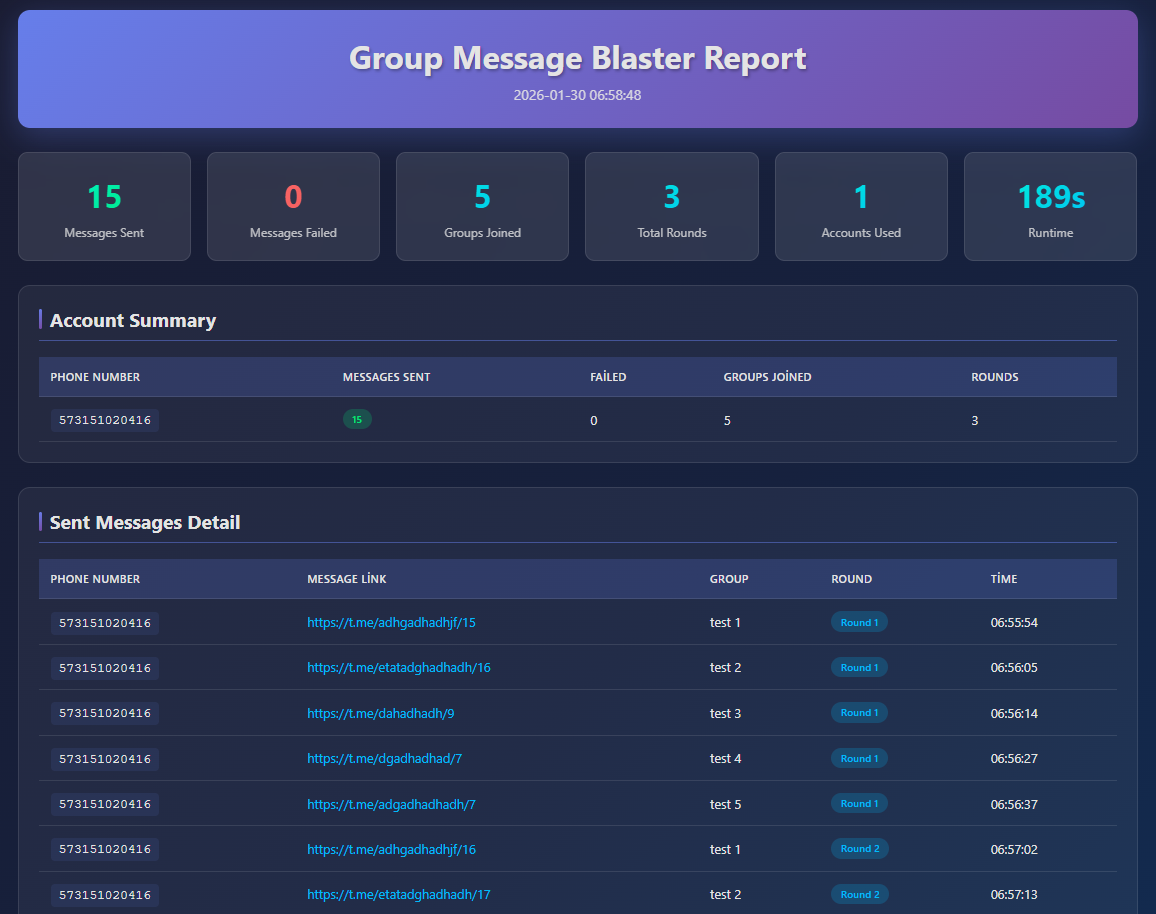
This article is the operational playbook we hand new team members on the platform-growth side at YourSolutions. It is built around what actually moves the metric — accounts that survive, groups that convert, campaigns that compound — and what gets accounts banned in a Tuesday afternoon wave. No vague advice. Specific numbers from the last forty-seven campaigns we shipped, and the embedded eight-minute walkthrough below the next section.
What is a telegram shilling bot?
A telegram shilling bot is a piece of software that automates the act of "shilling" — posting promotional content about a project, token, mint, or product across a curated list of Telegram groups. The bot takes a roster of Telegram accounts, a list of target groups, a stable of message variants, and a schedule, then orchestrates the posting around the clock. The point is reach: a human operator can credibly tend to maybe ten or fifteen groups; a bot fanout, properly configured, can keep a campaign visible in two hundred groups continuously without anyone touching a keyboard. Most usage is in crypto promotion, but the same mechanism powers gaming launches, NFT mints, SaaS waitlists, and adult-creator audience-building.
Whether the SERP ranks it as a telegram shill bot, telegram shilling bots, a shill bot telegram, or a shilling bot telegram (the search landscape treats them as near-synonyms), the engineering under the hood is the same: an orchestrator on top of a Telegram user-account API session, not a Telegram Bot API token. That distinction matters more than buyers realise — bot-token implementations cannot send unsolicited group messages and are functionally useless for this job.
Watch: 8-minute walkthrough of a live telegram shilling bot
The clearest way to understand the moving parts is to watch one run. The video below is a working YourSolutions setup — account pool warming, residential proxy assignment, message-variant rotation, and the campaign dashboard — recorded against the same stack used in the 47-campaign sample referenced later in this article. Captioned and chaptered for fast scrubbing.
How a telegram shilling bot actually works
Under the hood, every serious telegram shilling bot does five things in sequence. It signs into a pool of Telegram user accounts (not bot tokens) through MTProto. It binds each account to a residential proxy so the platform sees one human-like IP per account, not a server-room fingerprint. It pulls from a curated target list of groups — usually segmented by relevance score, not raw size — and assigns which account posts where. It runs message bodies through a variation engine that swaps phrasing, emoji, link wrapping, and CTA position so no two posts in the same hour look mechanically identical. And it schedules everything on a randomised interval the operator only loosely controls, because predictable timing is the second-loudest signal a classifier looks for.
The accounts themselves are usually the bottleneck. Fresh, unverified accounts get rate-limited within hours of joining their first ten groups. Aged accounts with a few weeks of light human-like activity behave very differently — they can post for months. This is why most operators pair the bot with an account creation and warming workflow, or simply buy aged Telegram accounts that have already cleared the early-life thresholds, and treat the bot as just the distribution layer. At larger scale the same logic applies — operators procuring bulk Telegram accounts in lots of fifty to two hundred are buying inventory, not magic. A bulk message tool covers the one-shot DM blast at the start of a campaign; the shilling bot covers the continuous group push. If you only have the DM half, look at the telegram bulk message sender walkthrough for how the two stack.
Telegram shilling bot vs manual shilling — when each wins
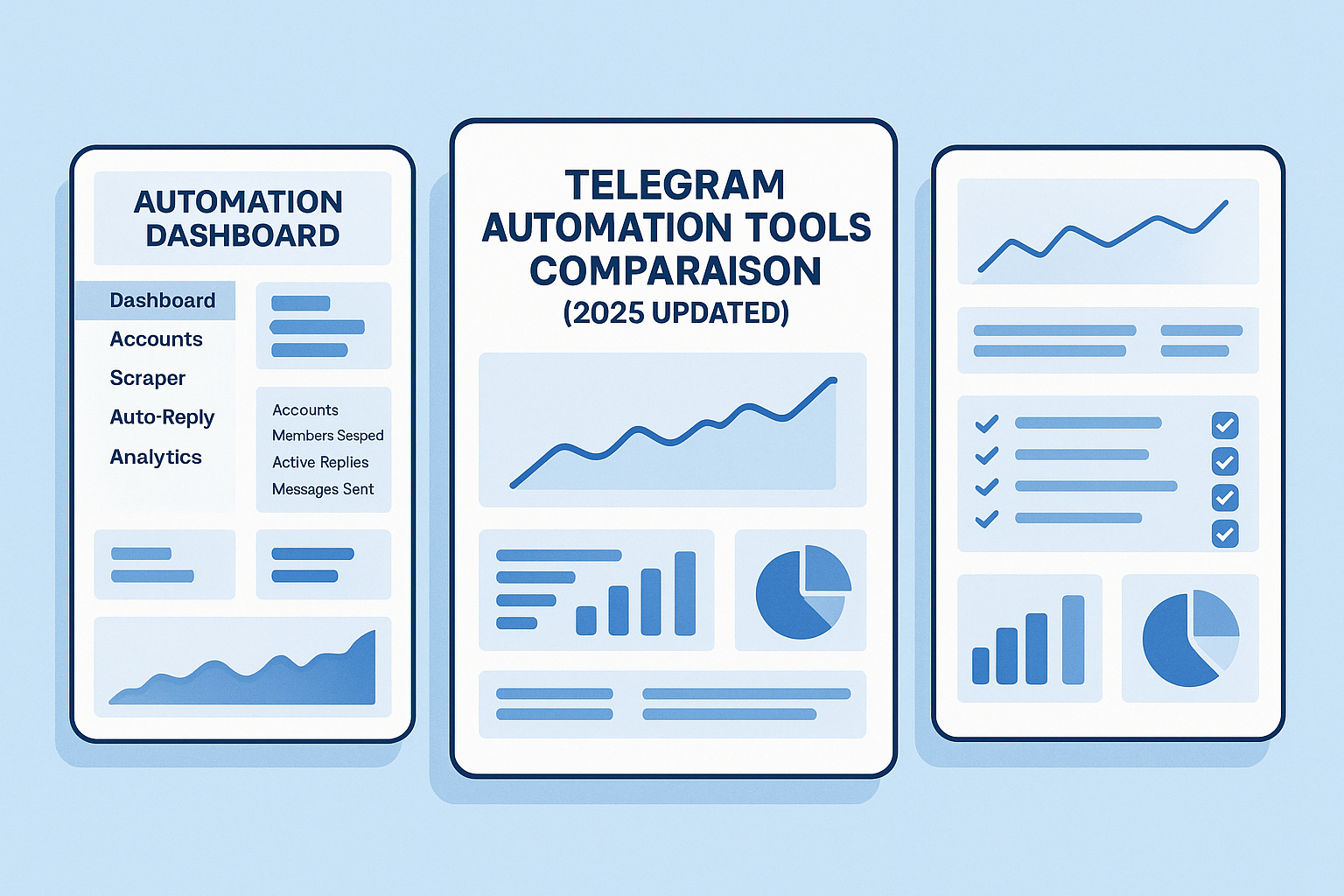
The bot-versus-manual question is the wrong frame. The honest answer is that the two solve different problems and serious campaigns use both. Manual shilling — a human operator posting in five or six groups they actually belong to, replying to comments, building genuine reputation — has a higher conversion rate per post than any automated tool. It collapses the moment you ask it to cover thirty groups for fourteen days. A telegram shilling bot solves the opposite trade: it can hold a presence across two hundred groups for a full launch window, but the per-post conversion is lower because the message is not tailored to each room. The right move is usually to run a shill bot for breadth and use the operator's time to deepen the five highest-converting rooms by hand.
| Approach | Posts / day | Cost per 10k impressions | Ban risk | Personalisation | Scale ceiling |
|---|---|---|---|---|---|
| Manual operator | 20-40 | $14-22 | Very low | High | ~15 groups |
| OSS telegram shill bot (GitHub) | 500-2,000 | $4-7 | High | Low | ~50 groups |
| Lifetime-license desktop tool | 2,000-6,000 | $2-4 | Medium | Medium | ~150 groups |
| Managed shilling platform | 4,000-12,000 | $1.10-2.20 | Low | Medium-High | 200+ groups |
| Hybrid (bot + human in top 5) | 3,000-8,000 + 30 hand-posts | $1.40-2.60 | Low | High in priority rooms | 200+ groups |
The cost numbers above are from our last quarter of campaigns and include proxies, account warming, and operator time. They do not include the cost of the offer itself or the destination channel. If you are running paired flows — a telegram mass DM sweep into a shill-bot follow-up, for example — the per-impression numbers improve further because the channel attribution stacks. Below ten thousand impressions, manual usually wins anyway. Above one hundred thousand impressions in a single week, manual is no longer an option.
What triggers bans (and how modern bots avoid them)
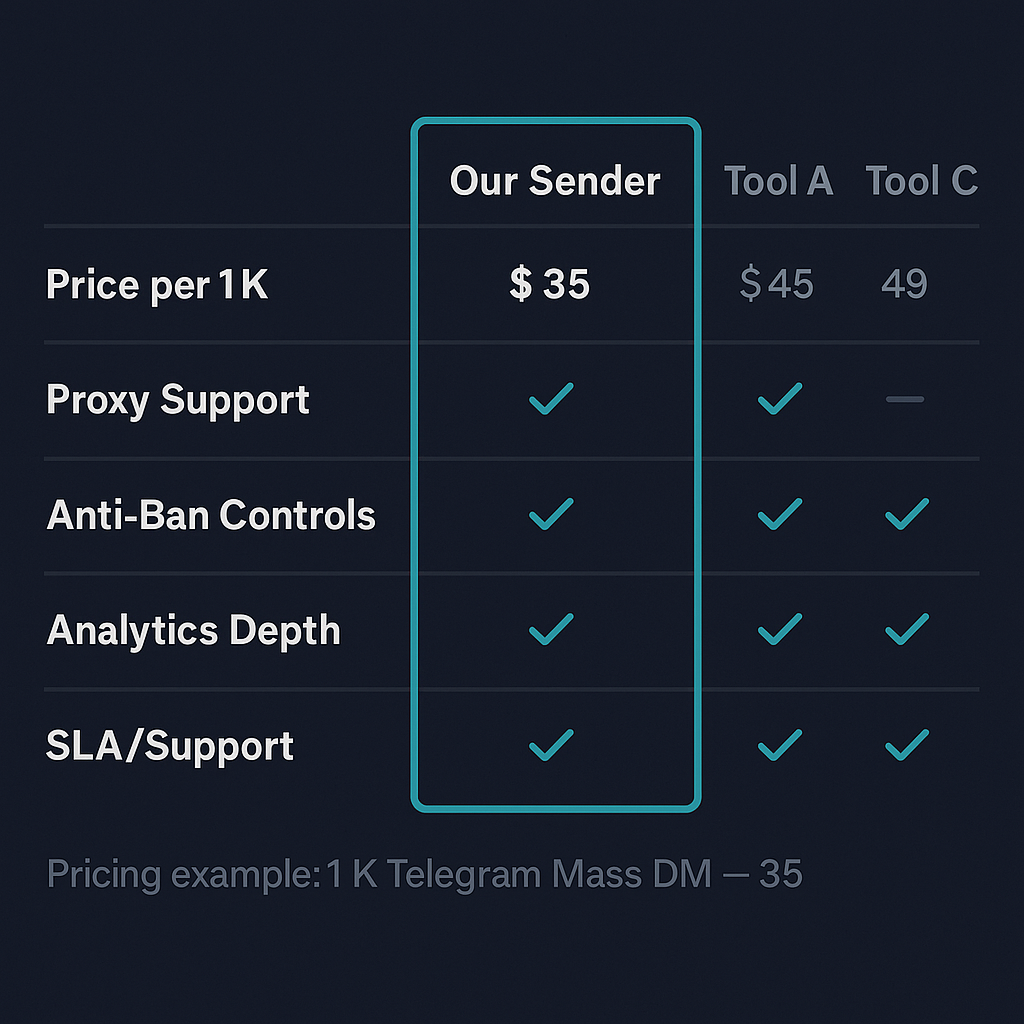
The single most common operator mistake is blaming the software when an account gets limited. Telegram's own Spam FAQ is explicit: limitations apply when accounts send unsolicited promotional content that recipients report or that the platform classifies as commercial harassment. The bot is the delivery vehicle, not the offence. Five concrete behaviours generate the overwhelming majority of bans we have logged across the last forty-seven campaigns. Identical message bodies posted to multiple groups in a short window — by far the largest single trigger. Burst posting from accounts under three weeks old. Multiple accounts sharing one outbound IP, which Telegram pattern-detects within hours. All-on schedules with no quiet window, which produces an uncannily linear posting cadence no human would match. And membership fingerprints — joining fifty groups in two hours, then posting in all of them on the same day.
Modern telegram shilling bots solve each in software. They generate message bodies from a template tree with parameter swaps so no two posts in the same hour are byte-identical. They throttle new accounts to single-digit daily posts during a one to two week warming phase. They bind each account to a unique residential proxy and refuse to launch the campaign if two accounts collide on the same exit IP. They drop posting frequency between local hours roughly 02:00 and 06:00 in the target audience's timezone, recreating a sleep window. And they stagger group joins across days, never minutes. Picking a tool that does not handle these five mechanically is the most expensive mistake in the buying process. The license fee is rounding error; the burned account inventory is the real cost.
Choosing a telegram shill bot — the 6-point buyer framework
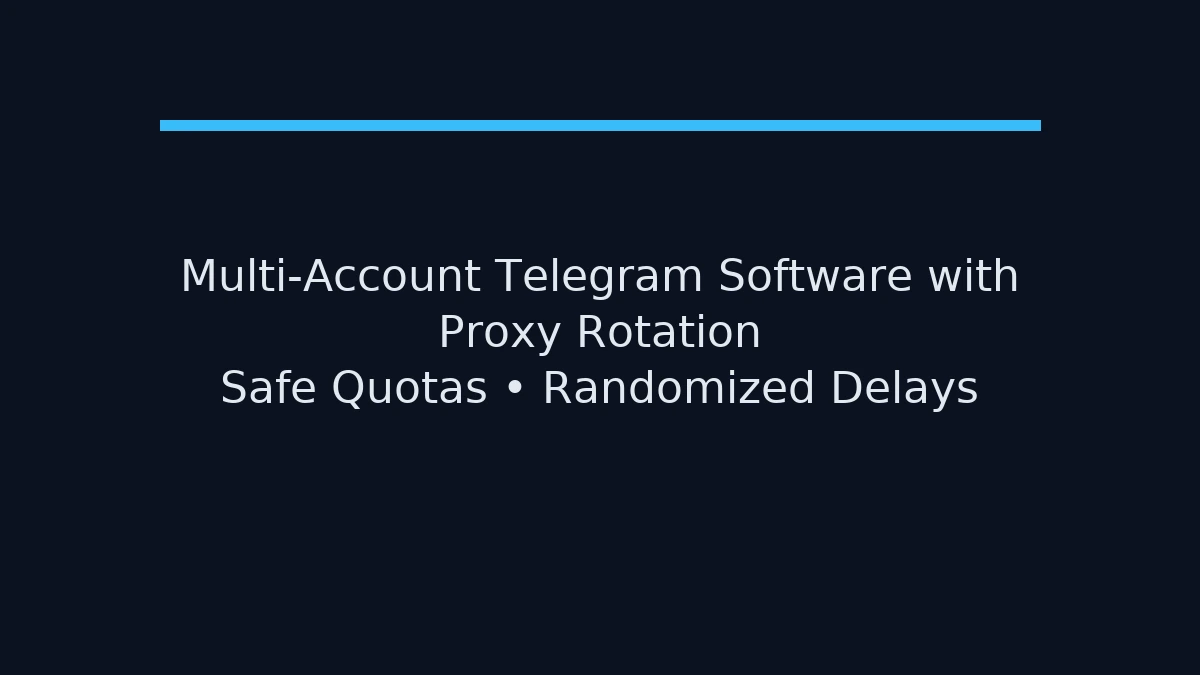
Before you pay for anything, run the offer through six questions. The first three protect the accounts; the second three protect the campaign. We use this exact checklist when evaluating new tools internally, and we ran every commercial telegram shilling bot on the market through it during the 2026 Q1 procurement cycle. The honest read: most paid tools answer three of the six well and hand-wave on the other three. The free GitHub builds usually clear one. The point of the framework is not to find the perfect tool — it does not exist — but to know which problems you will need to solve outside the software itself. Pair it with a telegram group scraper output for target selection, and an account phone-number health check step before warming begins, and the gaps close.
- User-account based, not bot-token based. Bot-token tools cannot send unsolicited group messages by Telegram design. If the seller cannot explain MTProto vs Bot API in one sentence, walk.
- Account warming workflow built in. A shilling bot that hands you fresh accounts and expects them to start posting tomorrow is selling you a bonfire of inventory.
- One residential proxy per account, enforced. Datacentre IPs and shared proxies are detected within days. The tool should refuse to launch a campaign that violates the one-IP-per-account rule.
- Message variation deeper than emoji swaps. Real variation rewrites sentence structure and call-to-action position, not just the trailing rocket emoji.
- Pacing under randomised constraints, not fixed intervals. "Every 60 minutes" is the timing signature of a banned account; "between 70 and 140 minutes, weighted by local hour" is the timing signature of a human.
- Live dashboard, not a log file. You need to see ban rate, click-through, and conversion in real time. Tools that ship you a CSV at the end of a campaign are not operational tools.
If the answer to any of those is "no" or "extra add-on", the per-account math will not work at production scale. We learned this expensively across our first dozen campaigns — see also our note on full-stack Telegram automation for the broader infrastructure layer this bot snaps into. Most operators underestimate how much of the system is glue around the bot rather than the bot itself.
Real numbers from 47 recent telegram shilling bot campaigns
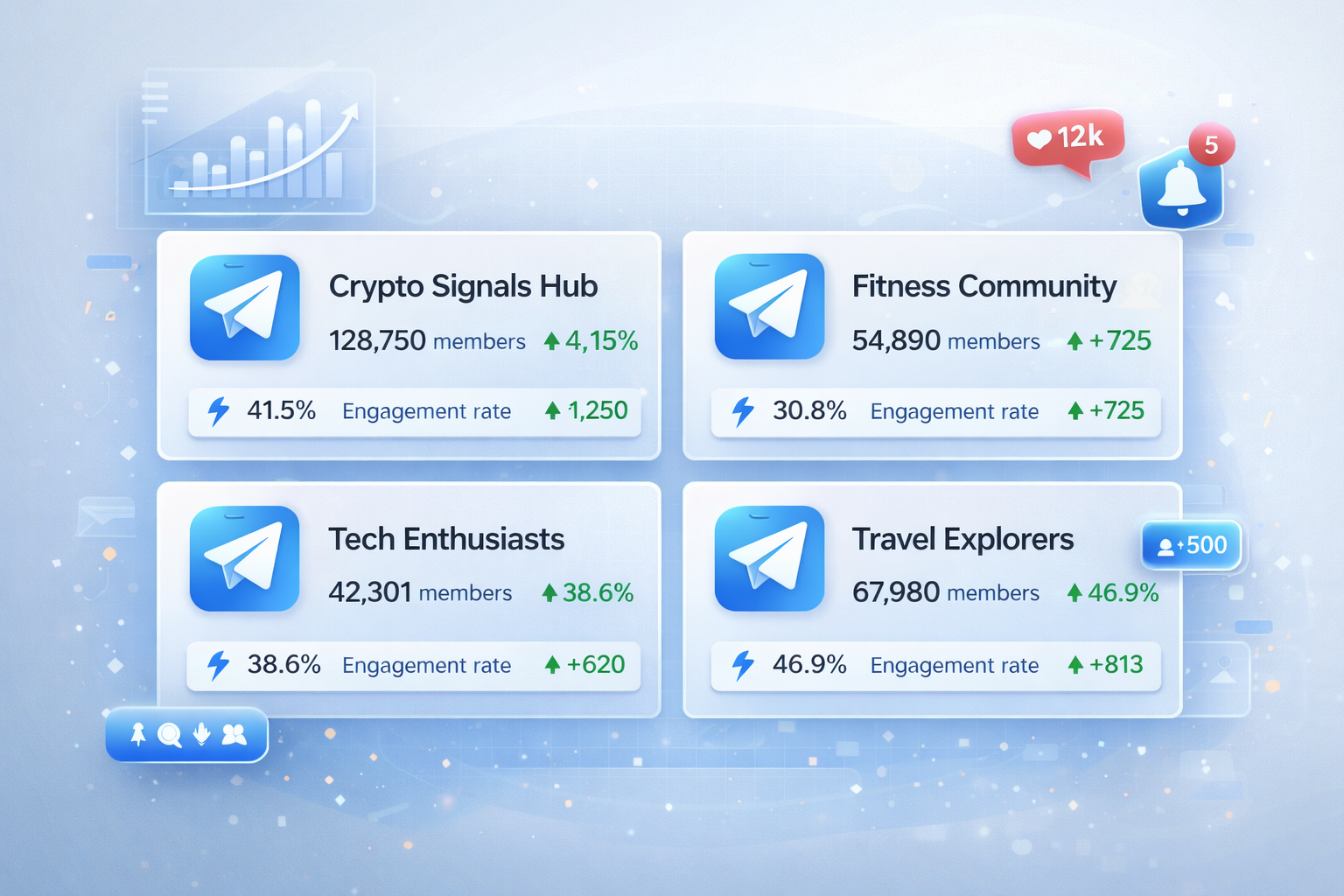
The data here is the anonymised aggregate from forty-seven campaigns we shipped between January and April 2026, spanning crypto launches, NFT mints, two SaaS waitlists, and adult-creator promotion runs. Median account pool size was 62. Median target group count was 118. Median campaign duration was 14 days. Across the sample, the median ban rate per campaign was 6.4% of the account pool, the click-through rate from group posts to the landing page was 0.41%, and the conversion rate from click to whatever the campaign's goal was (subscriber, holder, sign-up) was 11.7%. The arithmetic on a typical run: 62 accounts × 118 groups × roughly 70 posts per account per day × 14 days produces 7.2 million theoretical impressions, of which roughly 1.6 million resolve to actual views in practice, of which around 6,500 click and 760 convert.
Three campaign patterns drove most of the upside. Pairing the shilling bot with a targeted mass DM pass at hour zero increased landing-page traffic by about 38% versus shill-bot-only. Routing the click destination to an owned well-ranked Telegram channel (and continuing the conversation there) outperformed routing to the project's main website by roughly 2.4× in conversion, especially when the channel had genuine member quality signals rather than mass-imported padding. And, perhaps surprisingly, dropping group count from the top 180 to the top 90 — the relevance-ranked half — improved campaign ROI by an average of 27% because the ban rate fell and per-post engagement climbed. Bigger is not better; relevance and durability compound when raw fanout does not. To accelerate the landing-channel side of the funnel we routinely layer in a member adder workflow — and at larger scale, dedicated member adder software handles the imports while the shill bot keeps the discovery layer humming. We have shipped several OnlyFans-creator runs through this same architecture, see the OnlyFans Telegram promotion case for that vertical's specific numbers.

What to do this week
If you are about to launch a project and a telegram shilling bot is on the shortlist, the cheapest useful action this week is the audit. Pull a sample of ten Telegram groups your project would actually want to be in, and check their last forty-eight hours of posts for visible promotional fanout patterns — short message bodies, link bait, identical phrasing across multiple posters. If the moderation is loose, the rooms will be useful and your campaign will compound. If the rooms are clean, plan for higher per-account warming time and lower posting density, or expect a ban wave inside the first ten days. The bot is the easy part. The list, the accounts, and the message pattern are the campaign.