A telegram username autoclaimer is a script that watches a target @handle and registers it the instant it frees up — typically when an inactive account is auto-deleted and its username returns to the public pool. It runs on a Telegram user-account session, not a bot token, and fires the claim within milliseconds of detecting availability. It cannot grab Fragment auction usernames, which are locked as TON collectibles.
This is the explainer we hand anyone on the team before they go chasing a handle for a client launch. It is built around what actually works — the narrow set of usernames a loop can win — and the much larger set it physically cannot, no matter how fast the code runs. No hype about "grab any @username in seconds." Just the mechanics, the limits, and the numbers from the claim runs we have actually shipped.
What is a telegram username autoclaimer?
A telegram username autoclaimer is software that does one narrow job well: it watches a specific Telegram username and claims it the moment it becomes free. Most people first meet the idea as a telegram autoclaimer script on GitHub — a small program you point at a target @handle that polls Telegram's availability check on a tight loop and fires a registration request the instant the handle opens up. The appeal is obvious. Short, brandable usernames are scarce, and the good ones are almost never sitting empty. When a desirable handle does free up, it can be gone again in seconds, claimed by whoever's bot reacted fastest. A human refreshing the username field by hand has no chance against a loop running every few seconds. So the autoclaimer exists to win that race — to be the first request in the queue the millisecond a username re-enters the pool.
Whether the SERP labels it a telegram username autoclaimer, a telegram autoclaimer, a username sniper, or a claim bot, they all describe the same loop. Usage clusters in a few places: crypto and project teams locking a brandable handle before a launch, resellers grabbing scarce three- and four-letter handles to flip, and creators reserving a vanity @username — the kind you'd want anchoring an OnlyFans Telegram promotion — before they start driving traffic to it. What none of these tools can do is manufacture availability. They only shorten the gap between a handle freeing up and you owning it.
How a telegram username autoclaimer actually works
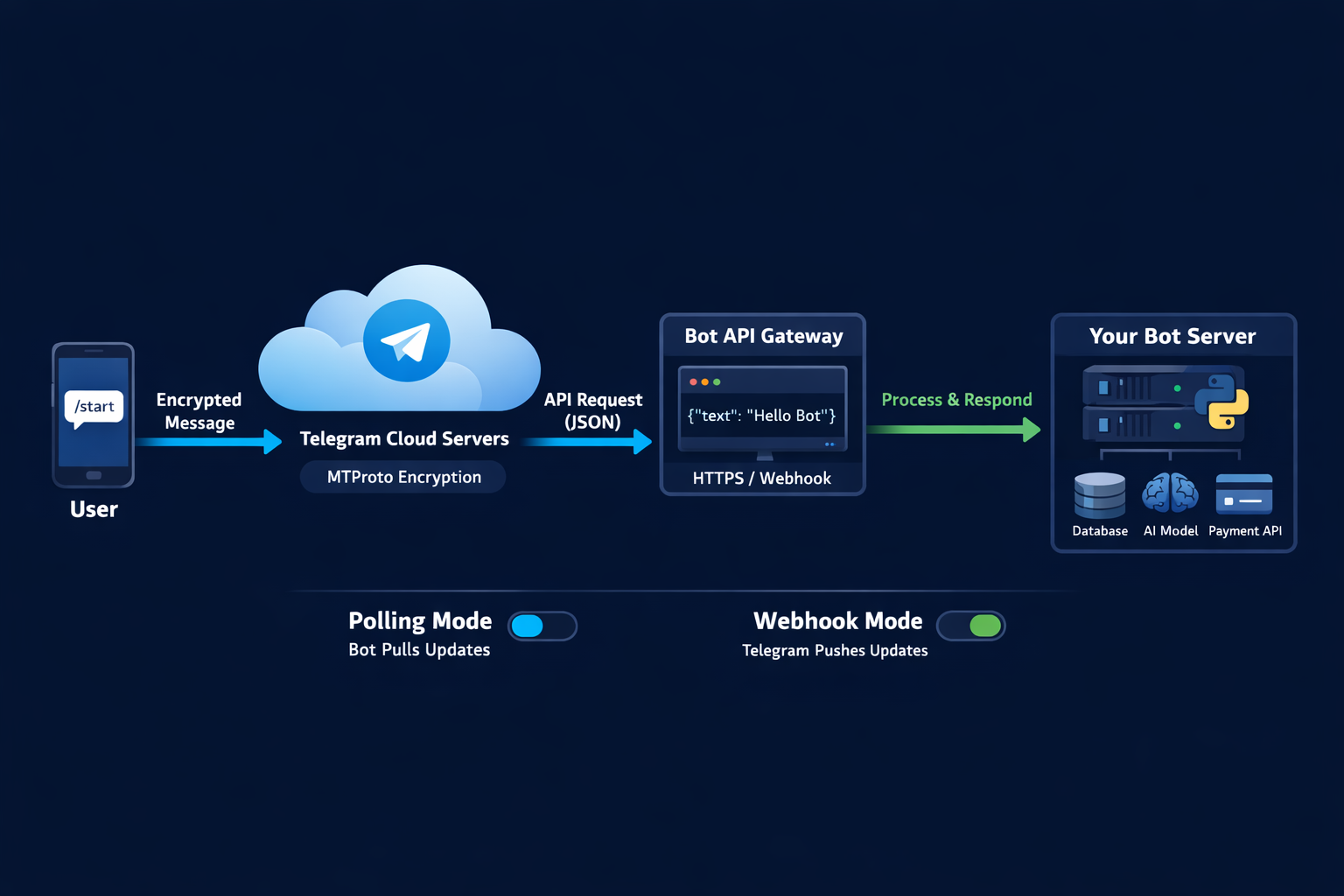
Under the hood, every working autoclaimer does the same four things in a loop. It signs into a Telegram user account through MTProto — a real account session, not a Bot API token. It calls the availability check (account.checkUsername for a profile, channels.checkUsername for a channel) against your target handle on a short interval. When that check flips from taken to available, it immediately calls account.updateUsername — or creates a channel and assigns the handle — to register it to you. Then it confirms the claim landed and stops. The single most common reason a beginner's setup never works is using a bot token instead of a user session. Bots cannot call account.updateUsername or channels.createChannel, so a Bot API build physically cannot claim a username no matter how fast it polls. This is the same user-account-versus-bot-token split that decides whether a telegram shilling bot can post at all.
Where do claimable usernames come from?
Here's the part that disappoints most people: a username only becomes claimable when the account or channel holding it is deleted, and Telegram makes that slow on purpose. Personal accounts auto-delete after an inactivity window the owner sets under "If away for" — options run from one month to a year, and the default sits at six months for older accounts and eighteen for newer ones. Only after that deletion does the @handle return to the pool, and operators consistently report a cool-down of roughly a month before it's claimable again. Telegram also reserves the right, per its FAQ, to recall usernames that are openly squatted or attached to dead channels. The practical upshot is blunt: the short, premium handles you actually want are not sitting empty waiting for a fast loop. What's claimable is the long tail — abandoned handles from accounts that genuinely lapsed.
That changes how you should think about the whole exercise. An autoclaimer is not a treasure hunt for great usernames; it's a patience engine for a specific lapsed one. If you have a particular dead handle in mind and you're willing to wait out its deletion timer, the tool earns its keep. If you're hoping to type "crypto" or a three-letter word into a sniper and walk away with it, you'll be watching a loop that never fires — because that handle was claimed years ago and, if it was ever valuable, has long since moved onto Fragment.
Can you snipe a Fragment username?
No — and this is the hard limit that ends most autoclaimer fantasies. In 2022 Telegram launched Fragment, its official marketplace where premium usernames are tokenized as collectibles on the TON blockchain and sold through public auctions. Once a username lives on Fragment, it is owned as a TON NFT; it never drops back into the free pool for a script to grab. Worse for snipers, Fragment auctions use a soft-close mechanic: any bid in the final minutes extends the timer, which is specifically designed to defeat last-second sniping. And usernames listed for auction are auto-swapped on the back end, so an availability check never reports them as free. Put plainly, the handles valuable enough to be worth sniping are exactly the ones locked behind Fragment. An autoclaimer can win the long-tail race; it cannot touch the collectible market.
This is the contrarian point most "best autoclaimer 2026" listicles skip, because it undercuts the pitch. The tool's whole reason to exist — grabbing a great handle before someone else does — collides with the fact that great handles are no longer in the free pool. Telegram moved them, deliberately, into a marketplace with anti-sniping built into the auction rules. So the honest framing is narrow: autoclaimers are for non-premium, lapsed handles. Everything else is a Fragment purchase wearing a different hat.
The account behind the claim is the real bottleneck
Buyers obsess over polling speed. In practice the account running the loop is the constraint that actually decides whether you win. Telegram rate-limits the very actions an autoclaimer leans on: checking and changing usernames too often triggers a FloodWait, a temporary cooldown that, in line with Telegram's Spam FAQ behaviour, can last from a minute to several hours. Hammer the check from one fresh account and you'll spend more time in FloodWait than watching the target. Aged accounts with a clean history tolerate far more activity before they're throttled, which is why serious operators run claims from warmed accounts rather than a phone number they registered that morning. Before committing an account to a claim run we put it through a phone-number health check, because an account already flagged or shadow-limited will lose every race regardless of how tight the loop is. The loop is trivial. The account is the asset.
There's a buy-versus-build decision hiding here. You can age your own accounts for a few weeks of light activity, or you can buy aged Telegram accounts that already cleared the early-life thresholds and skip the wait. For a single handle, one solid warmed account is plenty. The moment you're contesting anything — where another bot is also watching — one account is too few, because a single FloodWait at the wrong second hands the handle to whoever still had a session free.

Running an autoclaimer at scale without burning accounts
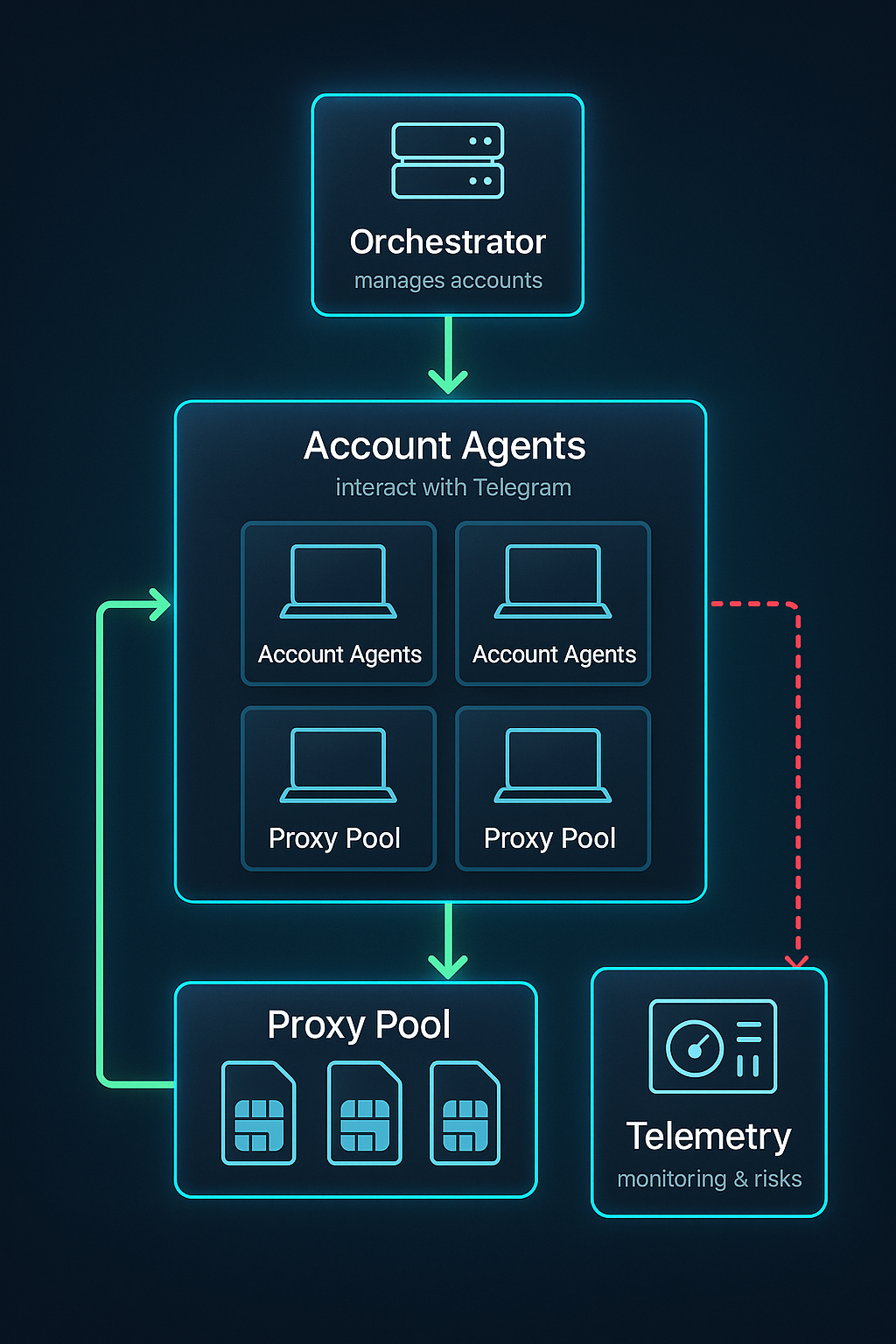
The way around per-account FloodWait is horizontal: spread the checking across many accounts so no single session exceeds the rate limit. A scaled setup keeps a pool of accounts, each on its own residential proxy, each polling a slice of your watchlist on a staggered interval, with one account designated to fire the actual claim. This is the same multi-account architecture behind most serious full-stack Telegram automation, and it has the same failure modes — share one IP across the pool and Telegram fingerprints the cluster within hours. Operators building this at volume either run an account creation and warming workflow or simply buy bulk Telegram accounts in lots of fifty to two hundred and treat them as disposable inventory. The math is unsentimental: if you're chasing a handful of valuable handles, you want enough warmed sessions that losing several to FloodWait or limits doesn't take you out of the race.
Autoclaim vs Fragment vs @Username_bot
There are exactly three legitimate ways to get a specific Telegram username, and an autoclaimer is only the right answer for one of them. If the handle is held by a long-dead account, the claimer is your route — you wait for deletion, then win the claim. If it's a premium collectible on Fragment, there is no claiming it; you bid in Toncoin and buy it, fees included. And if it's taken by an active account but you own the matching brand, Telegram's own @Username_bot lets you request it — provided you hold the same name on at least two of Facebook, X, or Instagram, per the FAQ. Picking the wrong path wastes weeks. Most people who think they need an autoclaimer actually need Fragment, and most who think they need Fragment are sitting on a free long-tail handle they could simply claim. It pays to track candidate handles in a Telegram CRM with their timers so you're not guessing.
| Path | What it costs | Typical time | Best for | Main risk |
|---|---|---|---|---|
| Autoclaim a freed handle | Tool + accounts + proxies | Days to months (waits on deletion) | Long-tail / lapsed handles | FloodWait; may never free up |
| Buy on Fragment | Auction price in TON + 5% fee | Minutes to a 7-day auction | Premium / short handles | Price; soft-close bidding war |
| Request via @Username_bot | Free | Days (manual review) | A brand you own elsewhere | Needs 2-of-3 social proof; discretionary |
What we'd actually do this week
If you came here for a telegram username autoclaimer, start by being honest about which of the three paths you're actually on. Look up the exact handle you want. If it resolves to an active account or channel, a claimer will never fire — your route is Fragment or @Username_bot. If it shows a long-dormant account ("last seen a long time ago"), note the date and set a watch; that one is genuinely claimable once it lapses. If it's already a Fragment listing, stop building scripts and budget the TON. The autoclaimer is worth running only for that narrow middle case — a specific, lapsed, non-premium handle you're willing to wait months for. For everything else, the tool is a distraction from the path that actually works. Be ruthless about that triage before you write a single line of code, because the wrong call costs weeks of waiting on a handle that was never coming back.
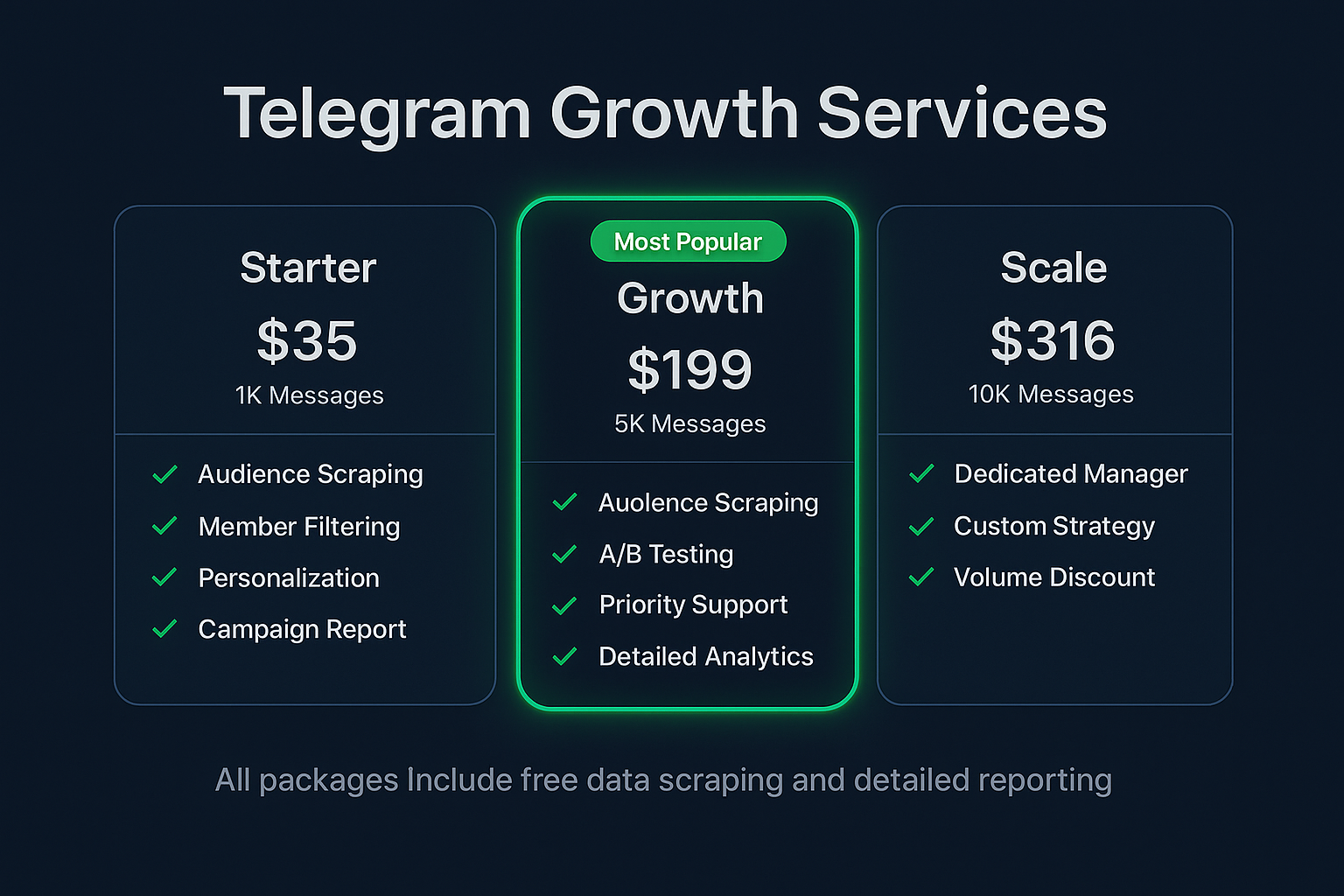
Claiming the handle is the start, not the finish. A clean, keyword-relevant @username is one input that helps you rank that channel in Telegram search, and the channel behind it becomes the destination for the rest of the stack — a targeted mass DM sweep at launch, a member adder workflow (or dedicated member adder software at volume) to seed the first audience, and a telegram bulk message sender for one-shot announcements. Target lists usually come out of a telegram group scraper. Creator accounts tend to claim a vanity handle specifically to anchor OnlyFans advertising on Telegram. The handle is cheap leverage; what you build on it is the campaign — and if you'd rather not run the whole stack yourself, that's what our managed Telegram growth service exists for.